Have you heard the name Ed Guilbert?
He’s the father of Electronic Data Interchange (EDI).
What is that incredibly vague series of words?
Basically, instant long-distance communication—before the internet.
The impetus for this innovation? Military logistics.
Let’s set the stage.
It’s June 1948, and the Soviet Union, headed by Stalin, controls eastern Germany.
The Berlin Blockade is in full force.
You know, that time when WWII had ended, and the Allied powers had agreed to divide Germany into four different occupation zones.
Unfortunately, Berlin—viewed with special emphasis since it was the country’s capital—was also divided into four sectors, mirroring the division of Germany itself.
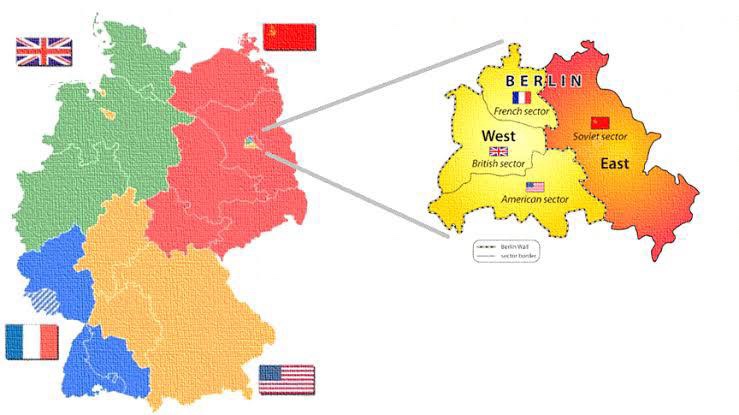
Now, imagine you’re living in Berlin, and by a stroke of good fortune, you live in western Berlin.
Well, if you zoom out, you’re really just on a small island within the larger Soviet-controlled area.
How are you getting food?
How are you getting goods?
Primarily by road, rail, and barge.
But that all changed when the Soviet Union implemented the blockade. Suddenly, air transport was the only way to deliver goods, and there were a few different languages in the mix.
Part 2, to be continued.
 Elizabeth Beeli
One Comment Add yours