Not a strained attempt at alliteration, at least on my part, but the name of the first Vietnamese film I’ve seen.
As I read the English subtitles and absorbed the emotions displayed by the actors, a love story inspired by the 60-day and night battle to protect Hanoi in late 1946 and early 1947 unfolds.
The emphasis on art and beauty tastefully contrasts the horrors of war.
With unreserved realism, the film depicts the profound sacrifices of war—sacrifices of lives, innocence, and security.
Boldly, the movie showcases the glaring disparity between the primitive equipment and skills of the Vietnamese and the formidable might of their adversaries.
It delves into the intricate dynamics between the Vietnamese and the French “Westerners,” illustrating a spectrum of relationships—from pure conflict among those battling the enemy to subtle alliances, passivity, and betrayals.
The narrative includes a great vehemence condemning the betrayal of the South’s alignment with the West, diverging from the majority of Vietnam’s desire for communism.
Having visited the Independence Palace earlier that day the significance of April 30th, 1975 was still top of mind—the moment when the North’s communist forces triumphantly invaded Saigon, symbolized by the storming of the city’s primary government building by a tank.
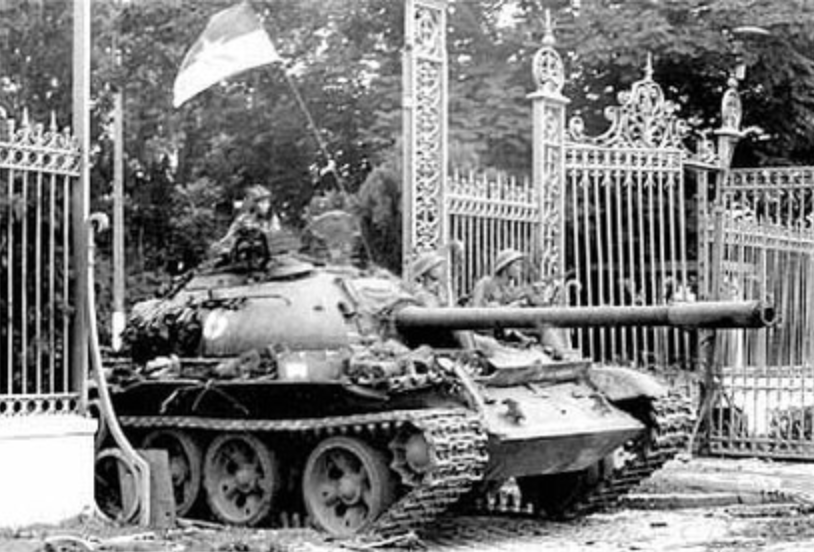
The aftermath of 1975 saw a wave of exile for all who had fought for the North, totaling roughly a million Vietnamese—a staggering figure considering the population of Saigon, Ho Chi Minh City, today is around 9 million. The equivilant of if a little more than 10% of the population were removed. A non trivial number.
That was 49 years ago.
Meaning our grandparents generation lived through that.
Many of my friends, born in the South, likely have personal connections to those exiled—a testament to the enduring impact of our grandparents’ generation.

